Fire & Water Mitigation
Wildfire defensible space, flood and erosion control that satisfies insurance inspectors and keeps your home standing after the next burn season.
Colorado insurers want defensible space and they want it documented. We thin, clear, and stage the work so your coverage holds and your land stays put.
Capabilities
- Defensible-space fire mitigation
- Vegetation thinning & brush removal
- Water & flood mitigation
- Erosion control & slope stabilization
- Drainage solutions for structures
Built for Colorado
Jefferson County and Park County insurers want defensible space documented before renewal. We thin, limb, and clear to the state recommended zones — and stage the material so your property is ready for inspection and ready for the next burn season.
Ready to move?
Start with a real assessment.
Tell us the scale, the goal, and the urgency. We'll come back with a real plan — not a canned reply.
Configure your projectFire and Water Mitigation for Colorado Mountain Property
Fire and water mitigation is the work that decides whether your mountain property survives the next bad year. At Hilltop Mountain Services, we build defensible space against wildfire, manage the water and flood risk that comes with mountain terrain, and stabilize the slopes and drainage that fail when the ground gets saturated. We work across the Front Range and the high country, where the wildfire risk and the runoff risk are the same conversation.
Our mitigation work covers defensible-space clearing for insurance and safety, vegetation thinning and brush removal, water and flood mitigation, erosion control and slope stabilization, and the drainage solutions that keep structures from being undermined by the water that runs off the slopes above them. It is the unglamorous work that protects the expensive thing you built on top of the land.
Done right, it is what keeps your insurance renewable, your home defensible, and your slope in place through the burn season and the runoff season back to back.
Why Mitigation Is Not Optional in Colorado
The wildfire risk on the Front Range is no longer a someday problem. Jefferson County and Park County properties are being reassessed by insurers every renewal cycle, and defensible space — documented, not just done — is increasingly the difference between a policy that renews and one that does not. A clean, thinned, properly zoned defensible space is what an inspector and a fire marshal are looking for, and we build to that standard.
The water side is just as real. A mountain lot that sheds water onto a structure, a slope that is slumping, a drainage that has been routing runoff toward a foundation — these are the problems that become failures in a single wet spring or after a burn scar stops holding what it used to. After a fire, the ground that used to absorb water repels it, and the runoff that follows is what takes out the driveways, the walls, and the homes below.
Mitigation is the work that happens before the bad year. It is cheaper, faster, and more effective than the repair that happens after.
What We Do
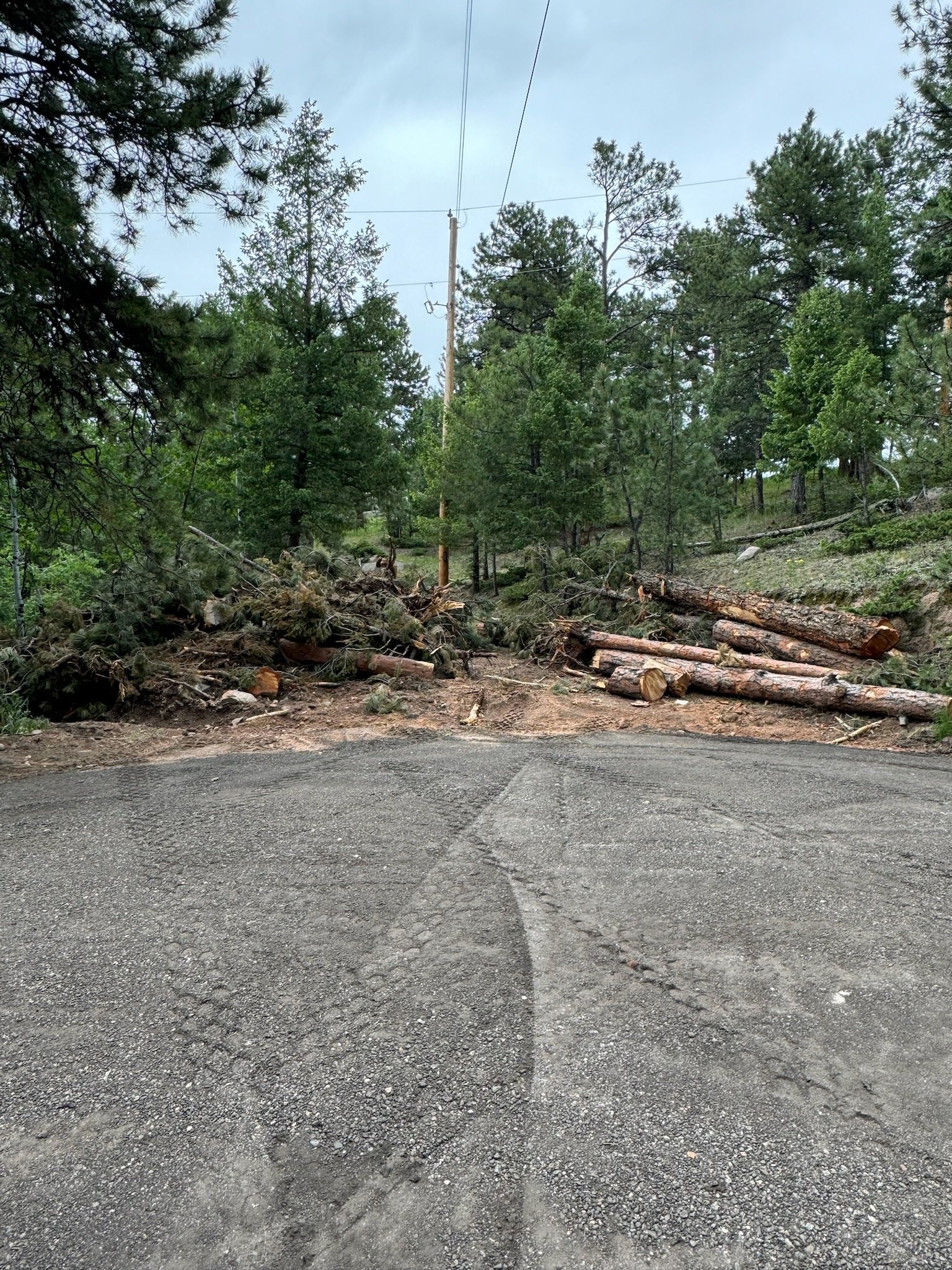
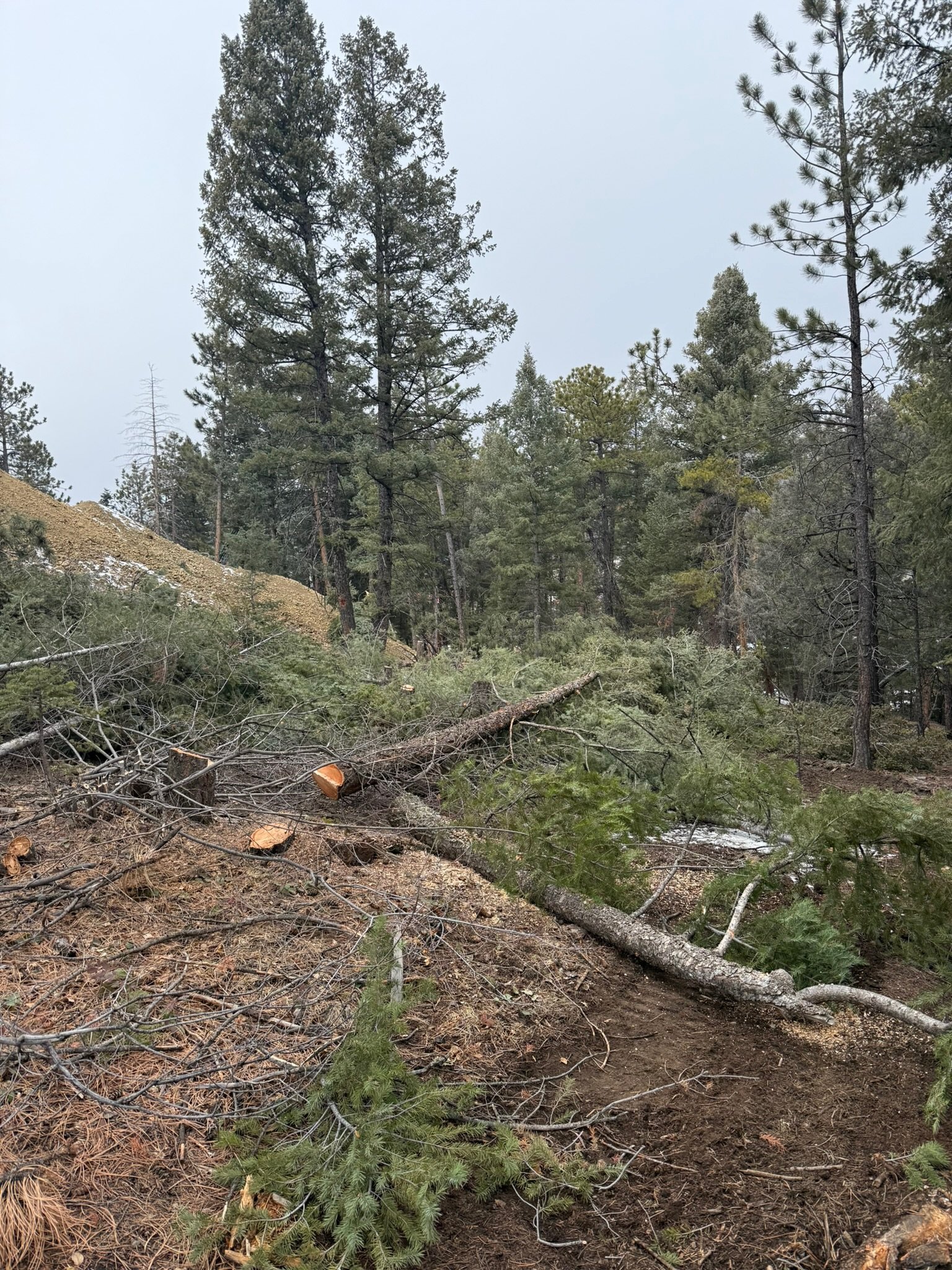
Defensible space — we thin, limb, and clear to the Colorado State Forest Service recommended zones, extending from the structure outward, so the work meets what an inspector and an insurer expect to see. We stage the material — chipped, hauled, or stacked per your plan — so the property is ready for inspection, not just cleared.
Vegetation thinning and brush removal — removing the ladder fuels and the dead material that carry fire into the canopy, opening the understory, and leaving the stand healthier as well as safer. It is not clear-cutting; it is selective work that leaves the forest standing and defensible at the same time.
Water and flood mitigation, erosion control, and slope stabilization — building the drainage, the swales, the riprap, and the armoring that keep water off structures and slopes in place. After a fire, this is the work that keeps the next rainy season from doing what the fire did not.
How We Run a Mitigation Project
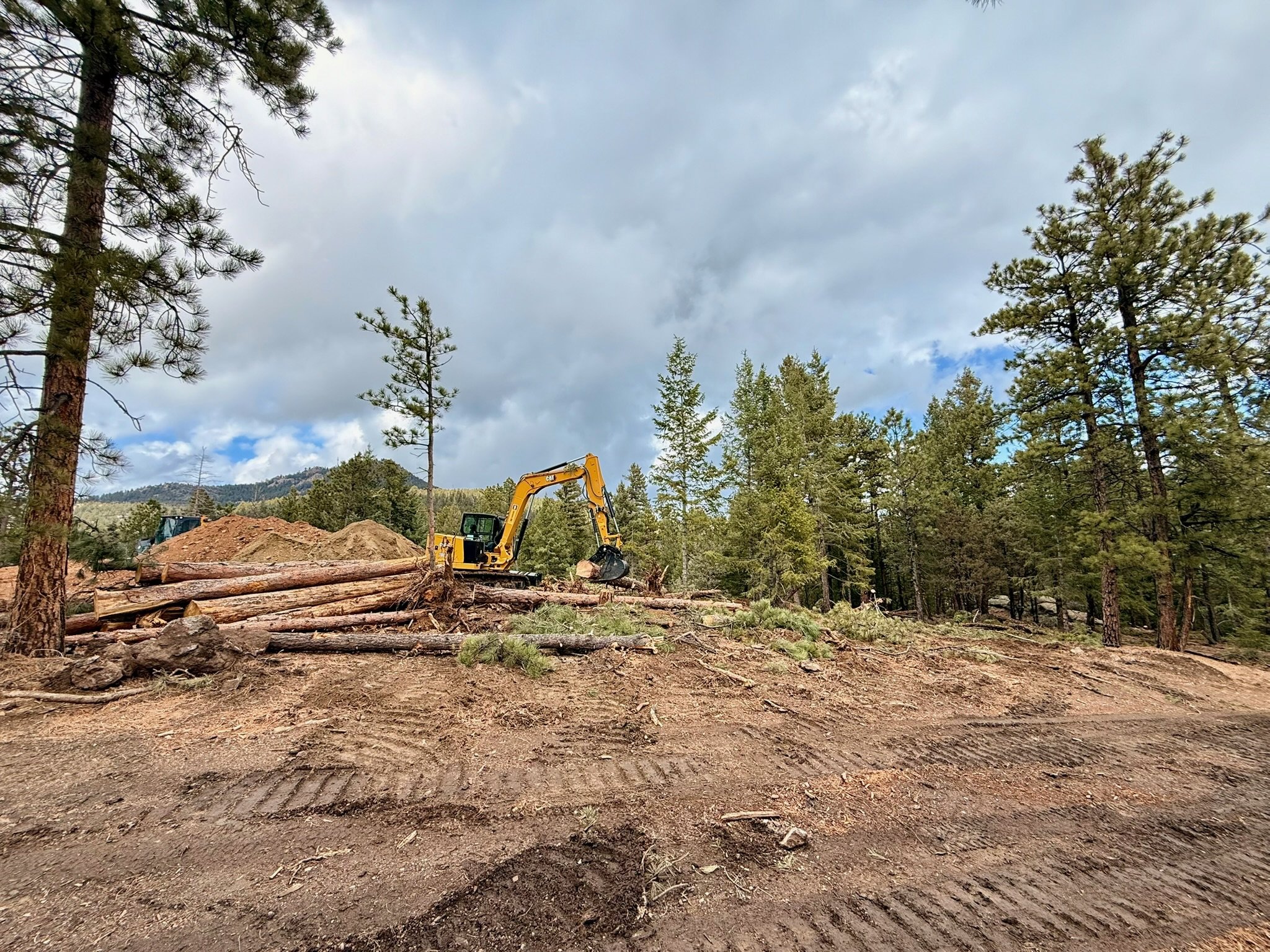
A mitigation project starts with a walk of the property and a clear-eyed look at the risk. We identify the fuels, the slope, the drainage, and the exposures that matter — to the structure, to the insurer, and to the county. If you have a wildfire mitigation plan or an insurance requirement, we work to it. If you do not, we help you understand what you actually need before we move a machine.
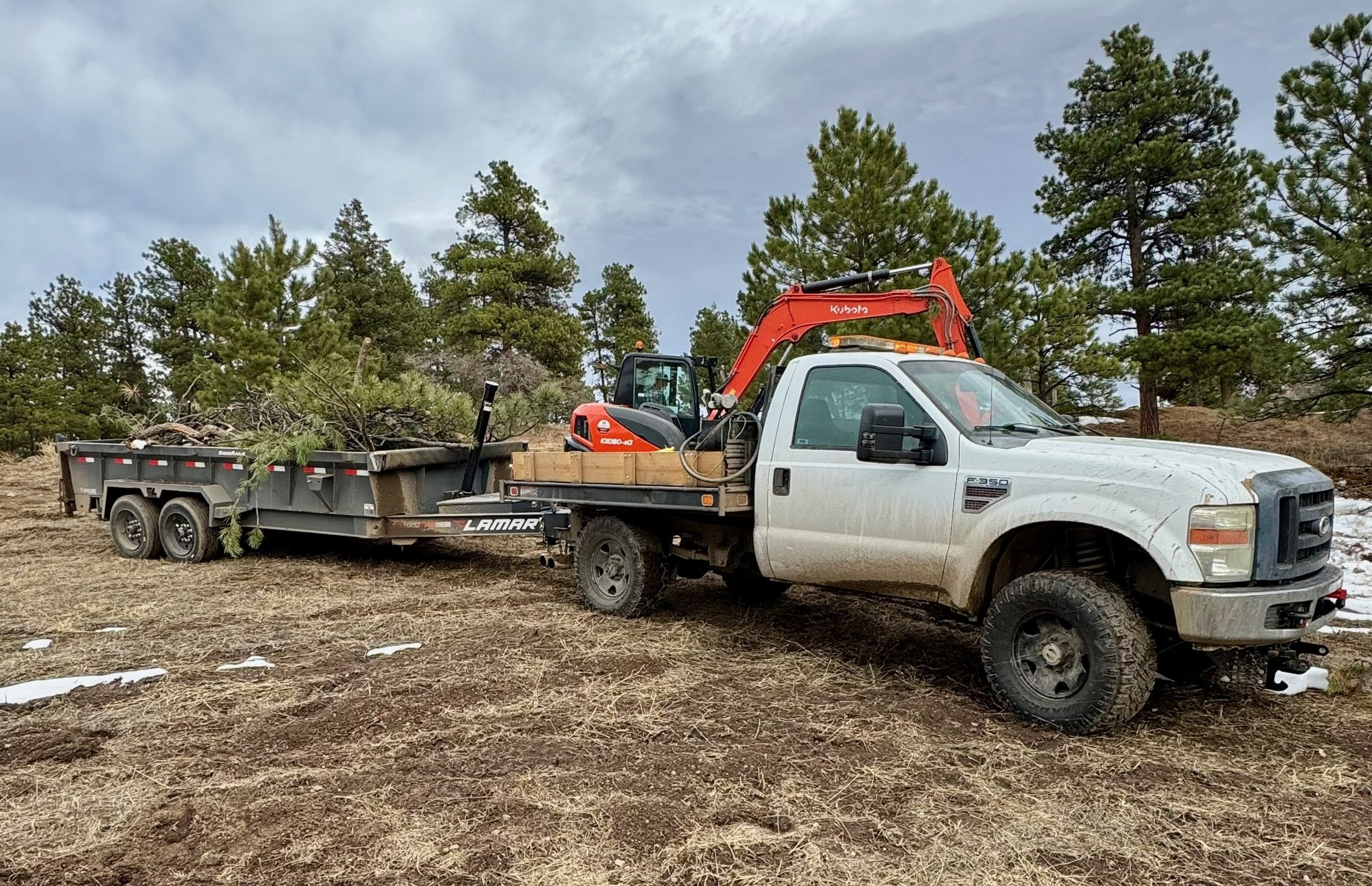
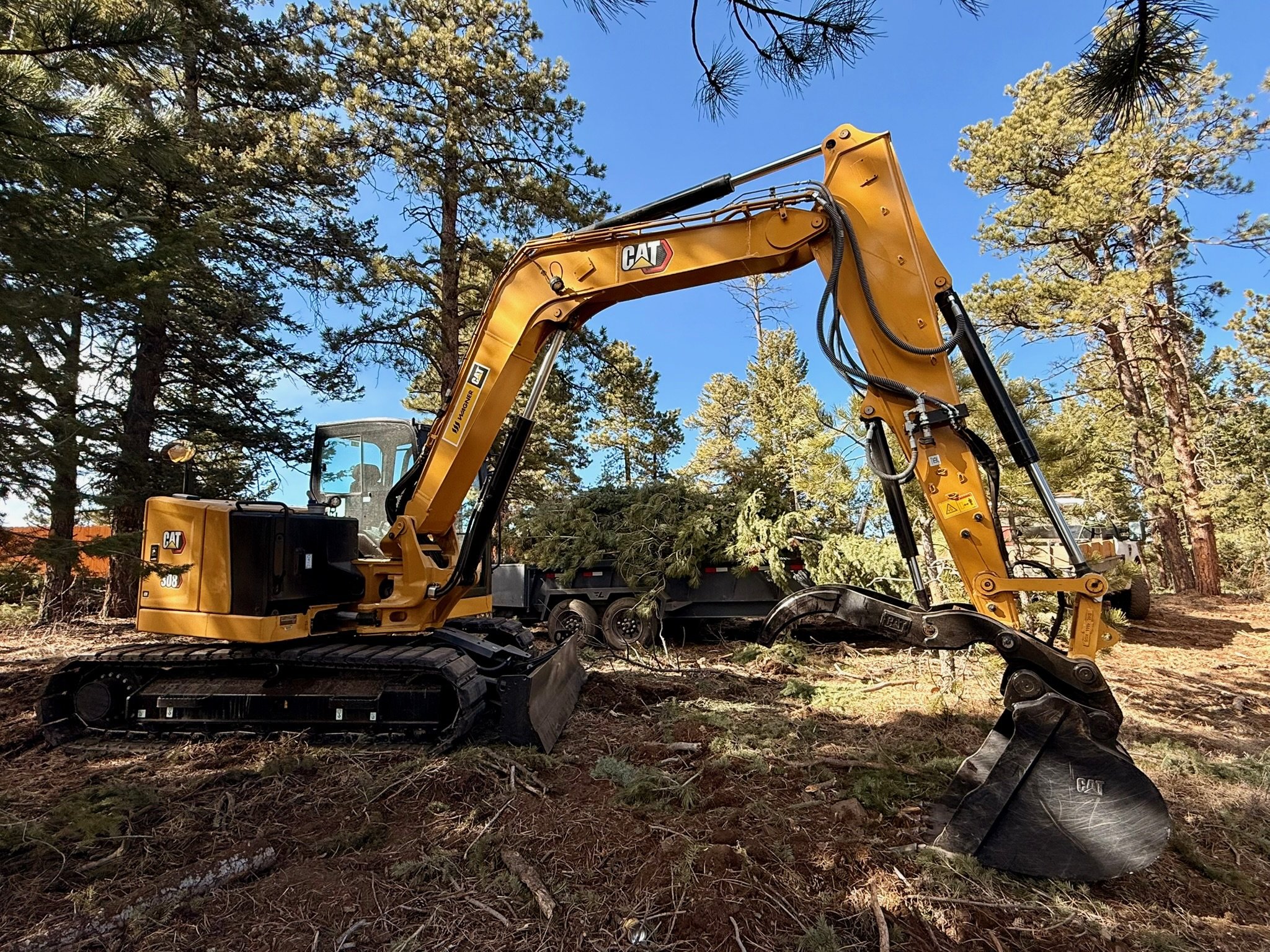
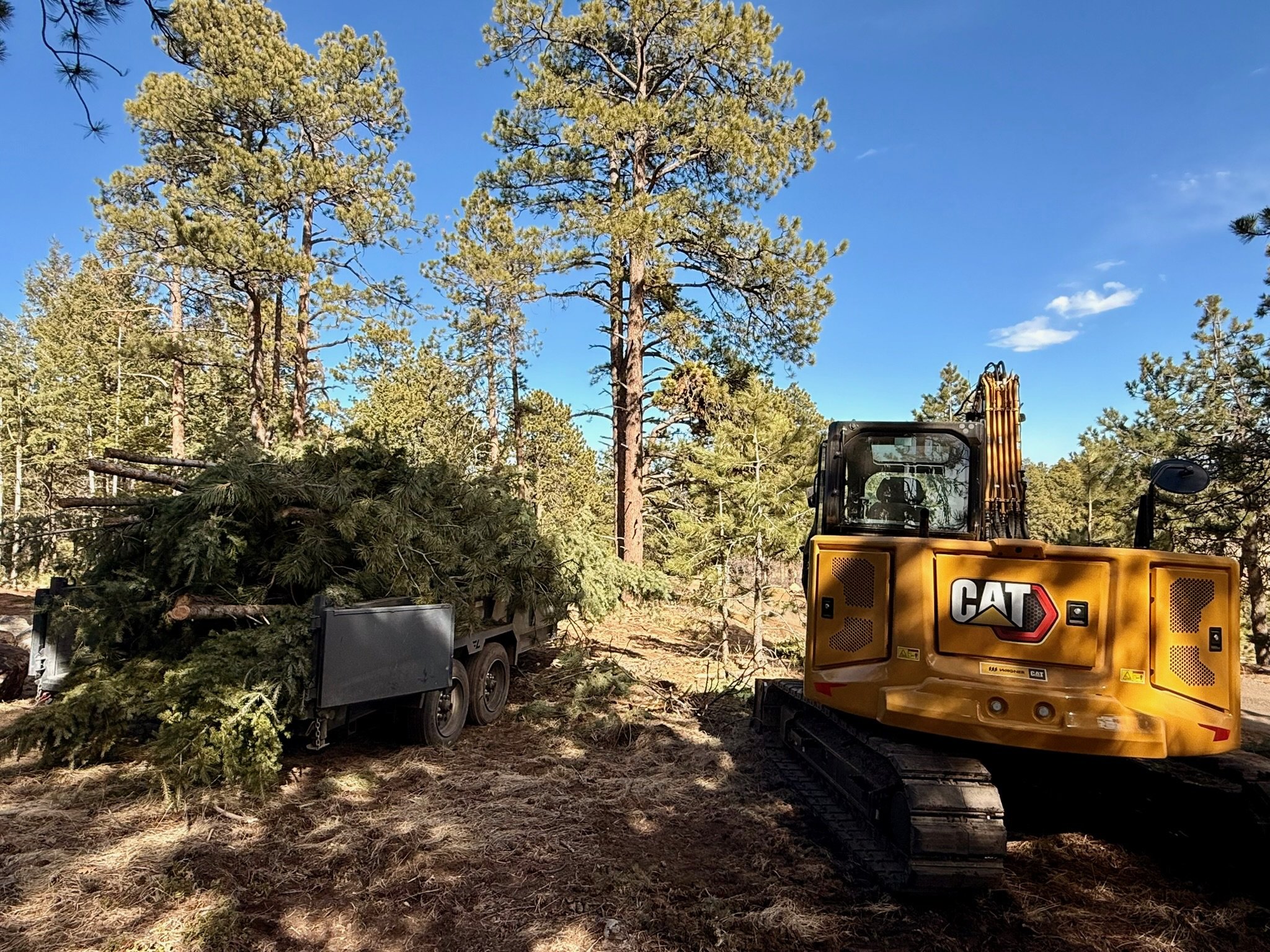
From there we sequence the work: defensible-space clearing closest to the structure first, thinning and brush removal outward, and the drainage and erosion work where the water and the slope demand it. We stage the material — chipped on site, hauled off, or stacked for firewood — per your preference and the county rules.
We finish with documentation where it matters. If your insurer or your county wants proof of the work, the last thing you want is to have done the job and not be able to show it. We leave the property defensible and the paper trail that backs it up.
Standards and Compliance
We work to the Colorado State Forest Service defensible-space standards — the zones, the thinning spacing, the ladder-fuel removal, and the material handling that an inspector expects to see. We do not "clear" a property in a way that leaves it denuded and vulnerable to erosion; we thin it to a standard that is both defensible and stable.
On the water and erosion side, we build drainage and slope stabilization that holds up to the runoff that follows a burn or a wet year — swales, riprap, armoring, and the grading that directs water away from structures instead of into them. We know what Jefferson County and Park County expect on disturbed ground, and we build to it.
Where a project needs a plan, an inspection, or coordination with a forester, we work through that with you. Mitigation that does not meet the standard the insurer or the county is checking against is mitigation you paid for that does not get you credit. We make sure it does.
Where We Run Mitigation
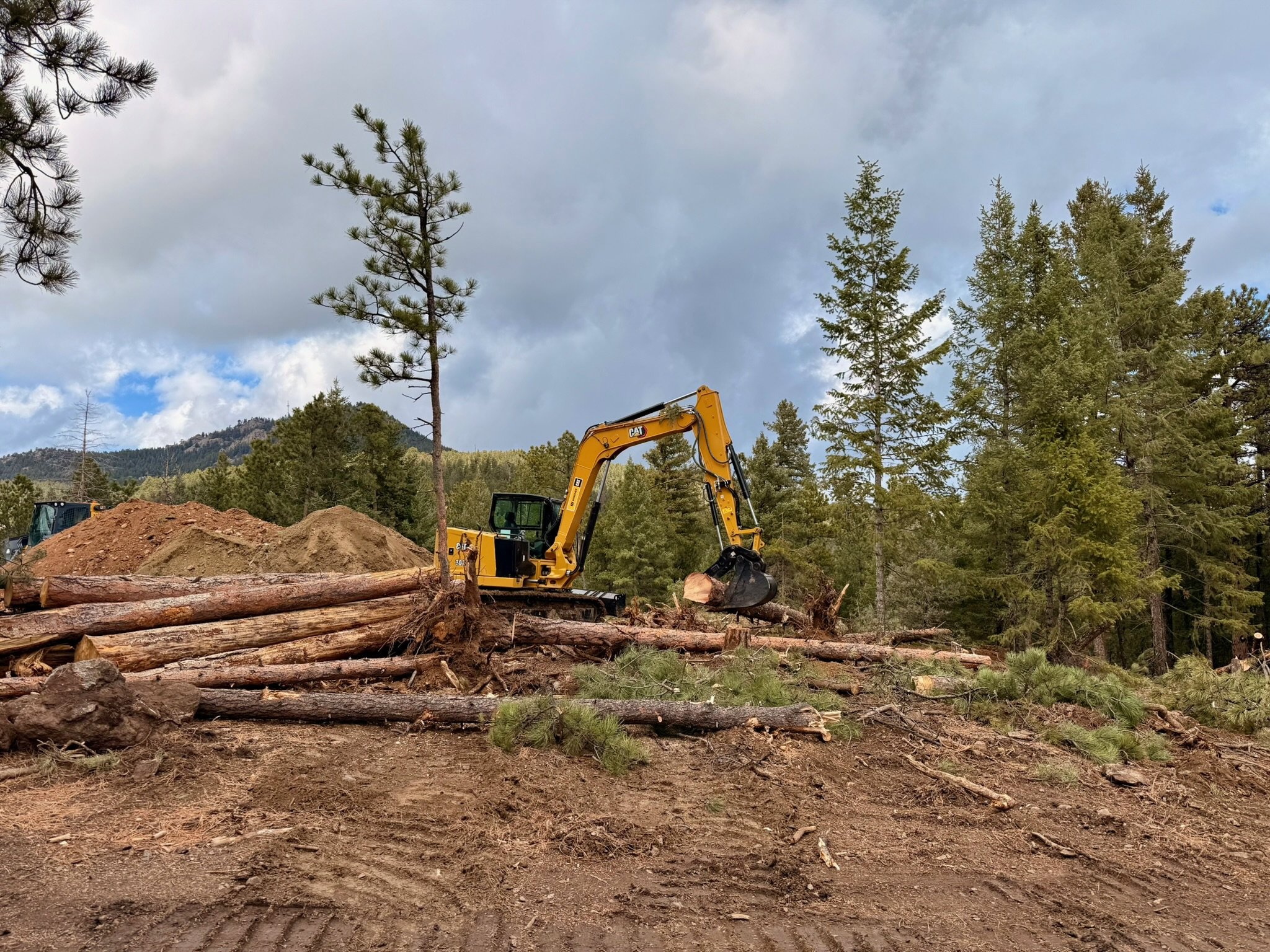
Our mitigation work runs the wildland-urban interface of the central Front Range — Pine, Conifer, Evergreen, Bailey, Buffalo Creek, Bergen Park, Genesee, Idaho Springs, Georgetown, Fairplay, and the high-country parcels behind them. These are the communities where wildfire defensible space and post-fire runoff are both real, annual concerns.
Working the same neighborhoods year after year means we know the fuel types, the slopes, and the insurer expectations in your area before we get there. It also means we know the local fire districts and the county requirements, so the work we do for you is the work that actually counts when it is inspected.
If your property is in our territory and you are not sure what it needs, the best first call is a site walk. We will tell you what we see, what the risk actually is, and what it takes to get the property to the standard your insurer and your fire district expect.
Questions to Ask Before You Hire a Mitigation Contractor
Ask whether the work will meet the State Forest Service defensible-space standards or whether it is just clearing. If a contractor is going to clear your lot bare, you are trading a fire risk for an erosion risk. Ask how the material will be handled — chipped, hauled, stacked — and whether that meets your county and your HOA.
Ask whether the contractor will document the work. If your insurer wants proof, undocumented mitigation is the same as no mitigation at renewal time. Ask what the plan is for the water and the slope after the thinning — because the runoff that follows thinning and the runoff that follows fire are the same problem.
And ask about timing. Mitigation done in the wrong season can damage the ground and the residual stand. We will tell you when the work should be done on your property and why, and we will not run a machine on ground that is too wet to take it.
Start Your Mitigation Project
If you are renewing insurance and need documented defensible space, if you have a slope or drainage that is becoming a problem, or if you want to get ahead of the next fire and runoff season before it is an emergency, we will come walk the property and give you a real plan. Tell us the parcel and the concern, and you will get an assessment from a crew that does this work every year on the Front Range.
Call 720 602 5060 or use the project configuration on the contact page. We build wildfire and water mitigation across the Colorado high country that holds up to inspection and to the bad year it is built for.
From the field
Real work, not stock.
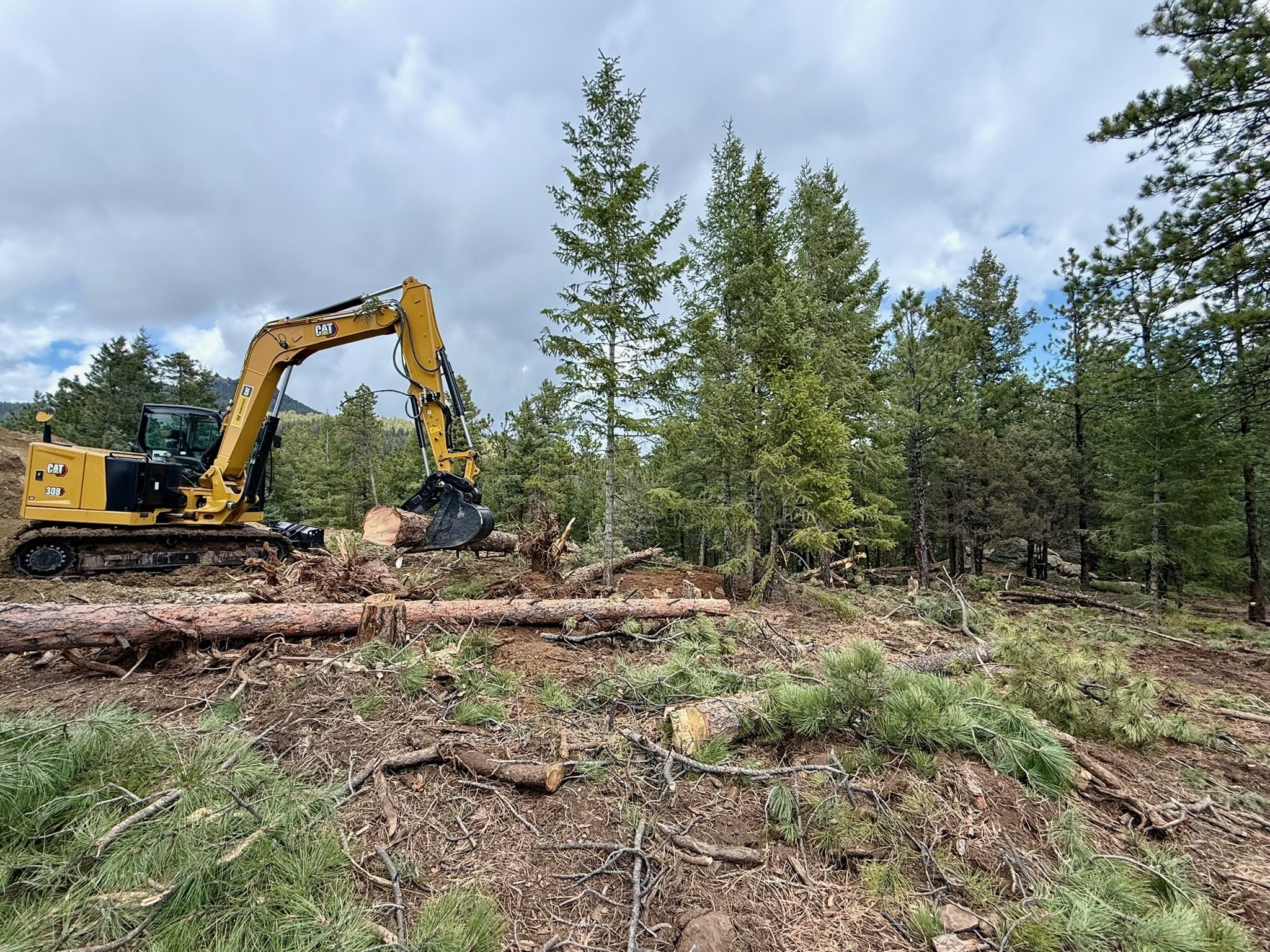
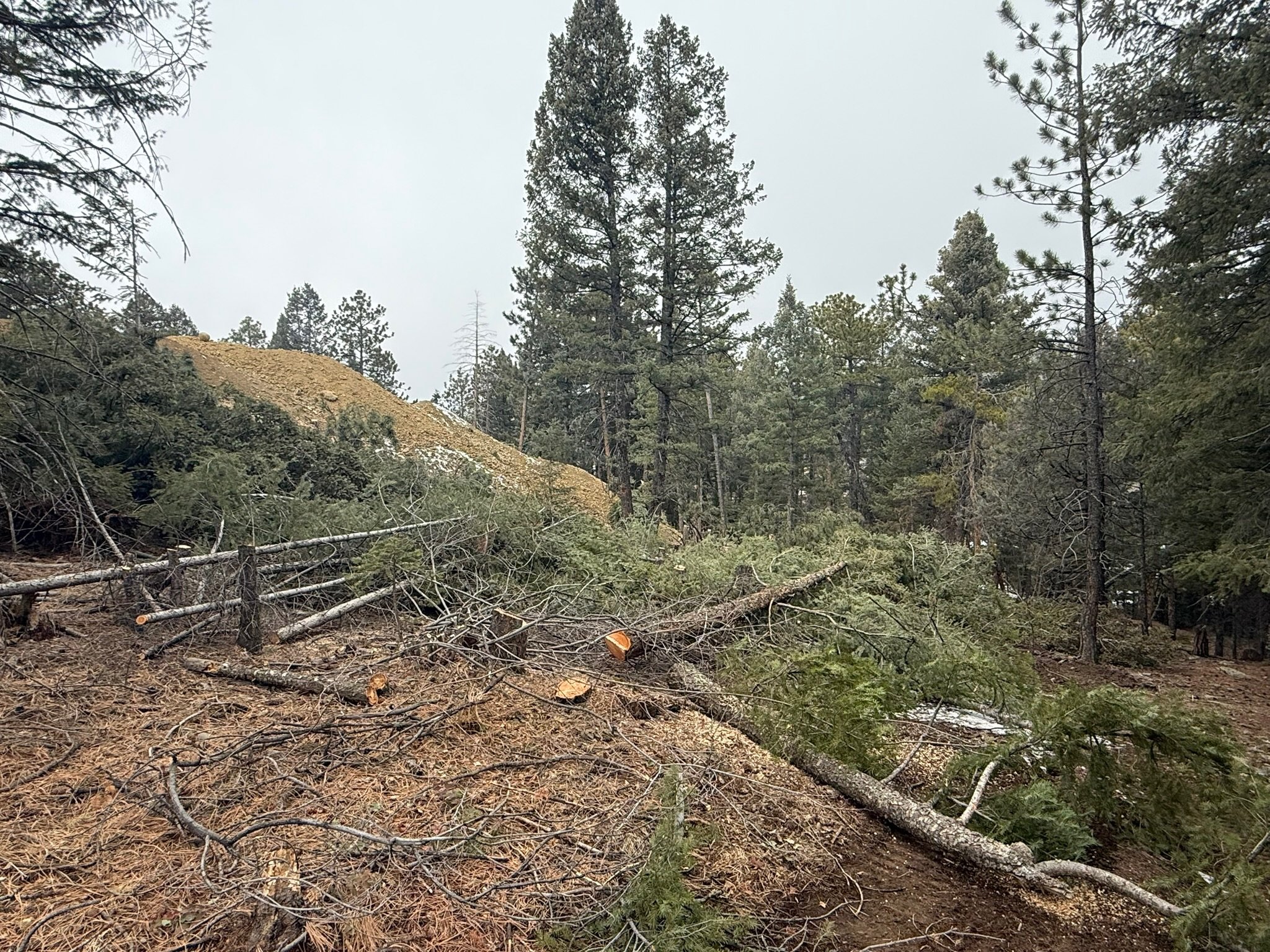
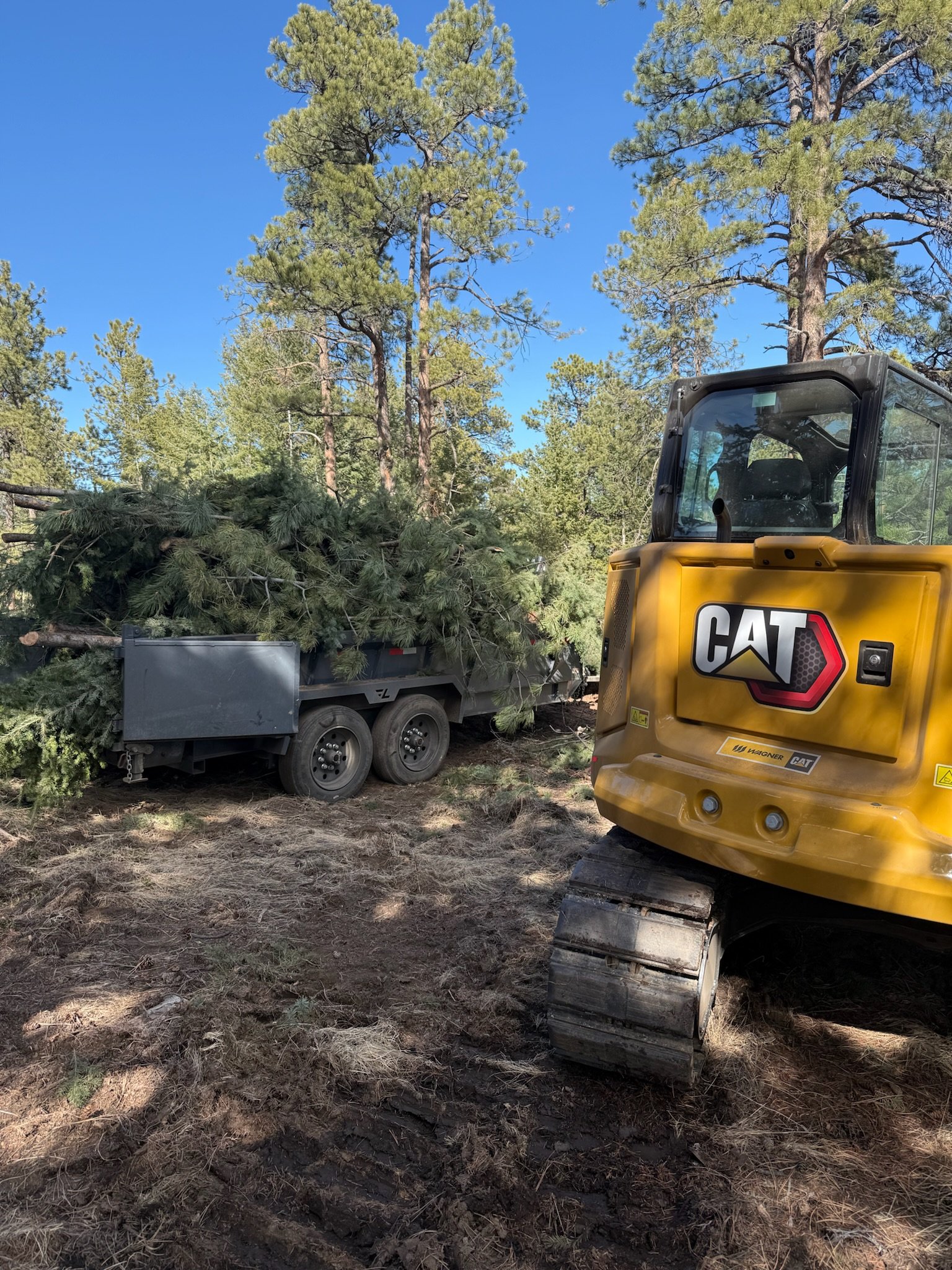
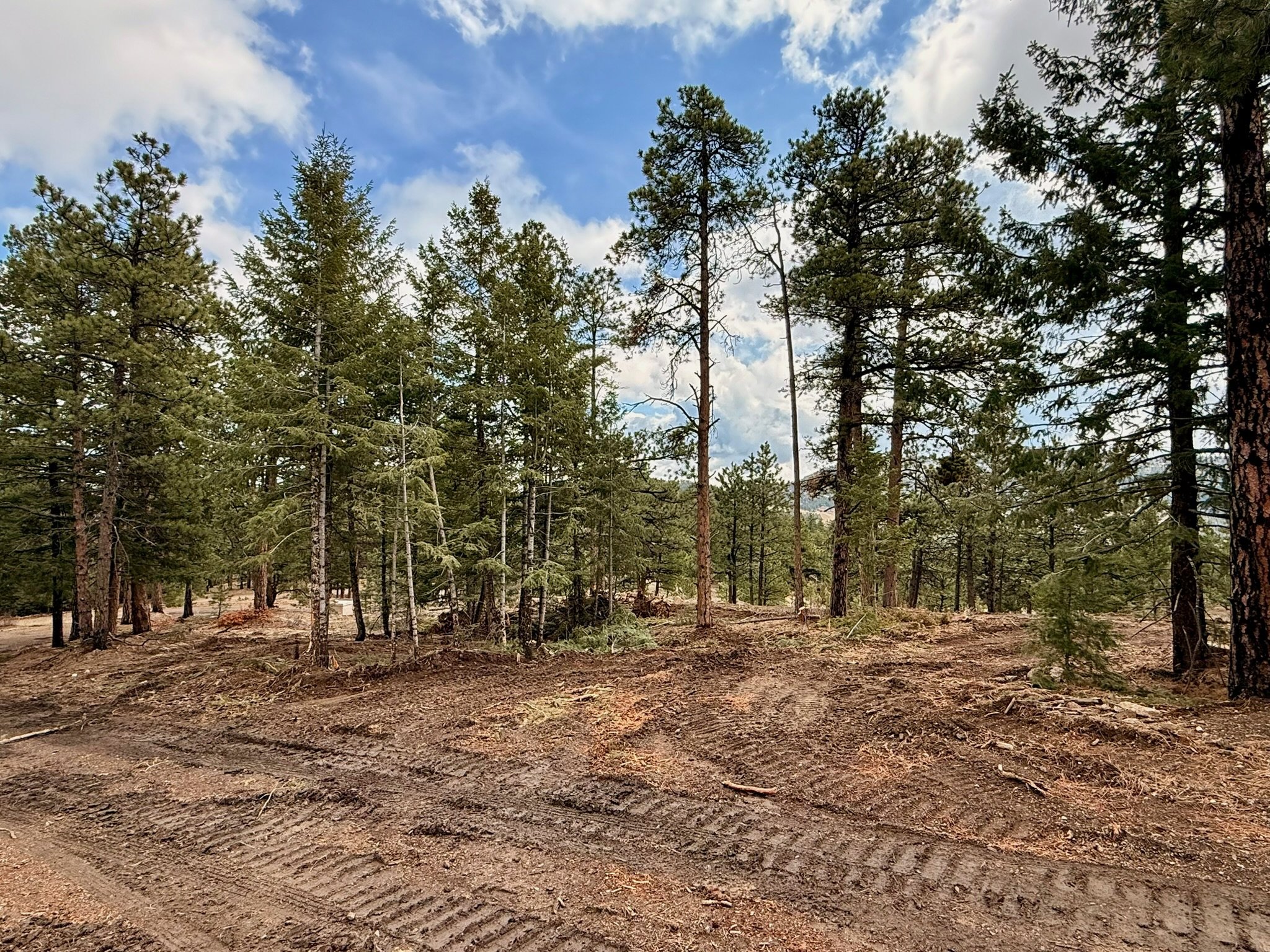
Fire Mitigation & Clearing — photographed from our own jobs.